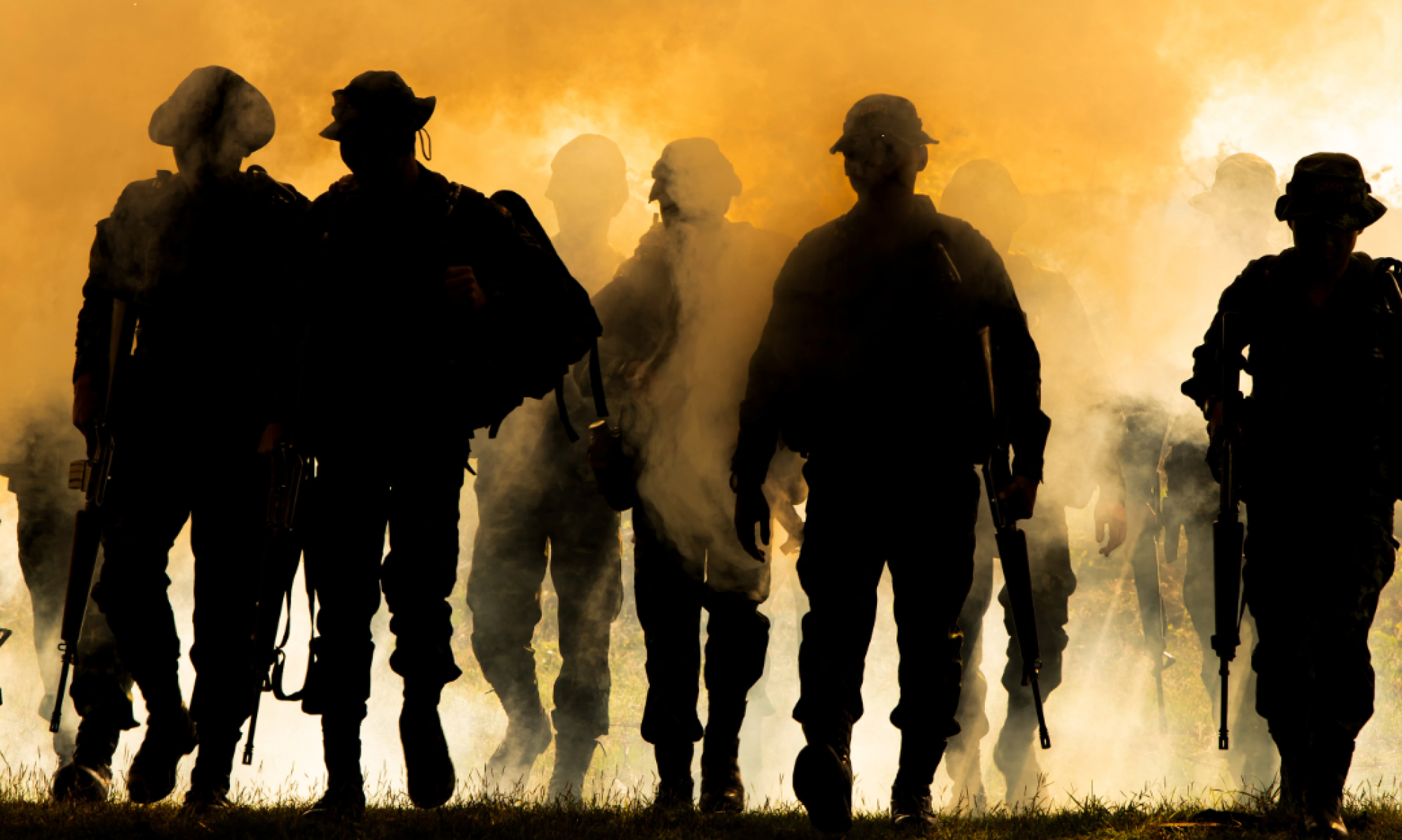


The 40-Day Out-Processing: From Wilderness to World-Changer

In the Gospel of Luke, we see a sequence every veteran can relate to: Public recognition, followed immediately by total isolation. Jesus is baptized—God’s “Commissioning” of His Son—and then He is immediately led by the Spirit into the wilderness.

He didn’t start His ministry at the Jordan River. He started it in the desert. If you feel like you are in a “dry season” after taking off the uniform, you aren’t lost. You’re in training.

1. The Attack on Identity (“If you are…”)

The very first thing the Enemy did in the wilderness was question Jesus’ identity: “If you are the Son of God…”

  • The Veteran Parallel: The civilian world will immediately challenge your identity. Without the rank on your chest or the unit patch on your shoulder, the “Enemy” whispers: Who are you now? Are you still a leader if no one is following? Are you still relevant?
  • The VTM Perspective: Jesus defeated this by relying on the Word, not His feelings. At VTM, we help you anchor your identity in being loved by and precious to God first, so that your “Veteran” status becomes a tool for service rather than a lost relic of the past.

2. The Temptation of “The Easy Way”

Satan offered Jesus bread when He was hungry and power without the Cross. He offered a shortcut to the finish line.

  • The Veteran Parallel: In transition, there is a massive temptation to take the “shortcut”—to chase the highest salary or the most comfortable life just to quiet the anxiety of the unknown. We often want the “Promised Land” without the “Wilderness.”
  • The VTM Perspective: Our Follow Me program recognizes that there are no shortcuts to a maturing faith. We embrace the “hunger” of the transition because it forces us to rely on “every word that comes from the mouth of God.”

3. Returning in Power

The most critical part of Jesus’ 40 days is found in Luke 4:14: “Jesus returned to Galilee in the power of the Spirit.” He didn’t come out of the wilderness limping; He came out launched.

  • The Veteran Parallel: Most transition programs just want you to “survive” the move to Collin County. We want you to return to your community in the power of the Spirit. Your 20 years (or 4 years) of service were your “baptism”—your 40 days of transition is your “proving ground.”
  • The VTM Perspective: The goal of our discipleship is that launching. We believe veterans are the most under-utilized “Disciplemakers” in the Kingdom. Once you’ve faced the wilderness and stood firm, you are ready to lead others through it.

The VTM “Bottom Line”: Transition is not a waiting room; it’s a war room. Jesus used His 40 days to set the Rules of Engagement for His entire ministry. We invite you to use your transition to do the same.


Horeb Cornerstone: The Exodus of the Veteran

The transition from military service to civilian life is rarely a straight line; it is a wilderness. At Veteran Transition Ministry, we believe the most accurate “map” for this journey was written thousands of years ago in the Book of Exodus.

When God’s people left Egypt, they weren’t just changing locations—they were changing their entire identity. For the veteran, the “Egypt” we leave behind is a world of rigid structure, clear rank, and defined purpose. Entering civilian life can feel like stepping into the Sinai Desert: vast, quiet, and confusing.

1. The Crisis of the “Known”

In Egypt, the Israelites had food and shelter, but they were in bondage. In the military, we have a mission and a community, but the “system” often owns our time, our bodies, and our schedules.

  • The Parallel: Just as the Israelites looked back at the “leeks and onions of Egypt” when the desert got tough, veterans often romanticize the service when the transition gets “sandy.”
  • Our Objective: We help you recognize that “looking back” is a natural part of the transition, but the goal is forward—toward a different kind of freedom.

2. The Wilderness (The “Gap”)

The space between the Red Sea and the Promised Land was a period of stripping away. The Israelites had to learn that they were no longer slaves to Pharaoh, but they hadn’t yet learned how to be sons and daughters of God.

  • The Parallel: Most veterans spend their first year in “the gap.” The old uniform is off, but the new identity hasn’t settled. This is where momentum is lost and where many of us end up “wandering” in isolation.
  • Our Objective: Through Horeb Cornerstone, we turn the wandering into a deliberate march. We use this “wilderness” time to deprogram the military mindset that ties your worth only to your performance.

3. Mt. Horeb: The New SOP

Mt. Horeb (Sinai) is where the “nuts and bolts” of the new life were delivered. It’s where God gave the Law—not to restrict them, but to give them a new way to live, work, and worship together. It was the birth of a nation of priest-warriors.

  • The Parallel: Veterans are uniquely “pre-trained” for the Kingdom. You already understand sacrifice, discipline, and being part of something larger than yourself. At Horeb, God didn’t tell the Israelites to forget their past; He redirected their training toward a higher Commander.
  • Our Objective: We help you find your “Horeb”—that place where your military discipline meets your spiritual calling. You were trained to be a soldier; we are here to help you realize you were actually being prepared to be a Disciplemaker.

Why This Matters for Collin County

We aren’t just looking to get you a job or a VSO (though we do that through Make it Home and Get Enrolled). We are looking to ensure that when you “Make it Home,” you are arriving with a spirit that is settled, a faith that is maturing, and a mission that is eternal.

The Exodus wasn’t just about leaving Egypt; it was about meeting God at the mountain. Let’s head to the mountain together.


Unknown Steps: What Joshua Teaches About Military Transition

Transitioning out of the military is one of the most significant changes a veteran will ever face. It’s not just a new job or location—it’s a shift in identity, purpose, and way of life. For many veterans, this season feels uncertain and overwhelming. The Bible tells a remarkably similar story in the life of Joshua, a leader who stood at the edge of transition, facing an unknown future without the structure he had always known.

Joshua’s story reminds us that transition is not abandonment—it is calling.


Life Under Moses: Mentorship, Mission, and Order

For years, Joshua served under Moses. He was a faithful second‑in‑command, a warrior, and a leader in training. Moses set direction. God spoke clearly. Joshua knew his role.

Military service often feels the same way. There is:

  • A clear chain of command
  • Defined responsibilities
  • Shared mission and values
  • A sense of belonging

Then suddenly, everything changes.

Moses dies. Command passes. Joshua is called forward.

“Moses my servant is dead. Now then, you and all these people, get ready to cross the Jordan River.” (Joshua 1:2)

For Joshua, the loss wasn’t just a leader—it was a way of life. The very moment of promotion was also a moment of profound uncertainty.

Veterans know this tension well. Leaving the military can feel like losing the structure and leadership that once defined daily life—while being expected to lead yourself into something new.


Crossing the Jordan: Transition Requires Trust

Before entering the Promised Land, Joshua and the people had to cross the Jordan River—at flood stage. There was no bridge. No easy plan. Just a command to move forward.

“As soon as the priests who carried the ark reached the Jordan and their feet touched the water’s edge, the water… stopped flowing.” (Joshua 3:15–16)

The water didn’t part first. The step came first.

Transition often asks veterans to do the same:

  • Apply before feeling ready
  • Trust God before the plan feels clear
  • Step forward while still carrying fear, grief, or doubt

God did not fail Joshua at the Jordan—and He does not fail those He calls forward today.


“Be Strong and Courageous”: A Word for the Veteran

God’s command to Joshua is repeated three times in one chapter:

“Be strong and courageous… for the Lord your God will be with you wherever you go.” (Joshua 1:9)

Strength here is not self‑made toughness. Courage is not the absence of fear. Both come from God’s presence, not Joshua’s experience.

Veterans are often trained to rely on discipline, preparation, and personal resilience—and those are valuable. But transition invites a deeper truth: God is the constant when everything else changes.

Your rank may be gone. Your uniform may be folded away. But your calling to live with integrity, faith, and purpose remains.


The Promised Land Wasn’t Easy—and It Was Worth It

Even after crossing the Jordan, Joshua faced battles. The Promised Land was not conflict‑free—it was purpose‑filled. God’s promise was never comfort; it was presence.

For veterans, the next season may still involve struggle:

  • Rebuilding identity
  • Learning a new culture
  • Facing wounds seen and unseen

But God’s faithfulness does not expire at transition points. He walks with you through every season—service, separation, and what comes next.


Our Mission at Veteran Transition Ministry

At Veteran Transition Ministry, we walk alongside veterans who are crossing their own Jordans. We believe transition is not the end of service—it is a new assignment. One where faith anchors identity and purpose is renewed.

Our Call to You

If you are navigating transition today—or will face one tomorrow—lean on God during this and every transition.
He is the same God who called Joshua forward.
He goes before you.
He will not fail.

You do not have to cross alone.